



Lagoped swim shorts made from marine waste
|
|
Every summer, swim shorts become a must-have. Yet behind this summer wardrobe staple lies a major issue: the environmental impact of textiles. Lagoped’s KAJA swim shorts meet this challenge by combining technology, durability, and responsible design. Made from marine waste and recycled plastic bottles, they embody a new way to create our clothes. What if this summer, your shorts became a statement?
The KAJA swim shorts stand out for their ethical and local design: the yarn is produced in Spain from marine waste collected in the Mediterranean and Atlantic. The weaving, printing, and final assembly take place between Spain and Portugal, within a small radius to minimize carbon impact.
Its soft and comfortable material is ideal for all water activities. And with its featherweight of 165 g, you almost forget you’re wearing it.
Elastic waistband with drawstring
Integrated mesh briefs
2 side hand pockets + 1 back patch pocket
"one with nature" embroidery on the back
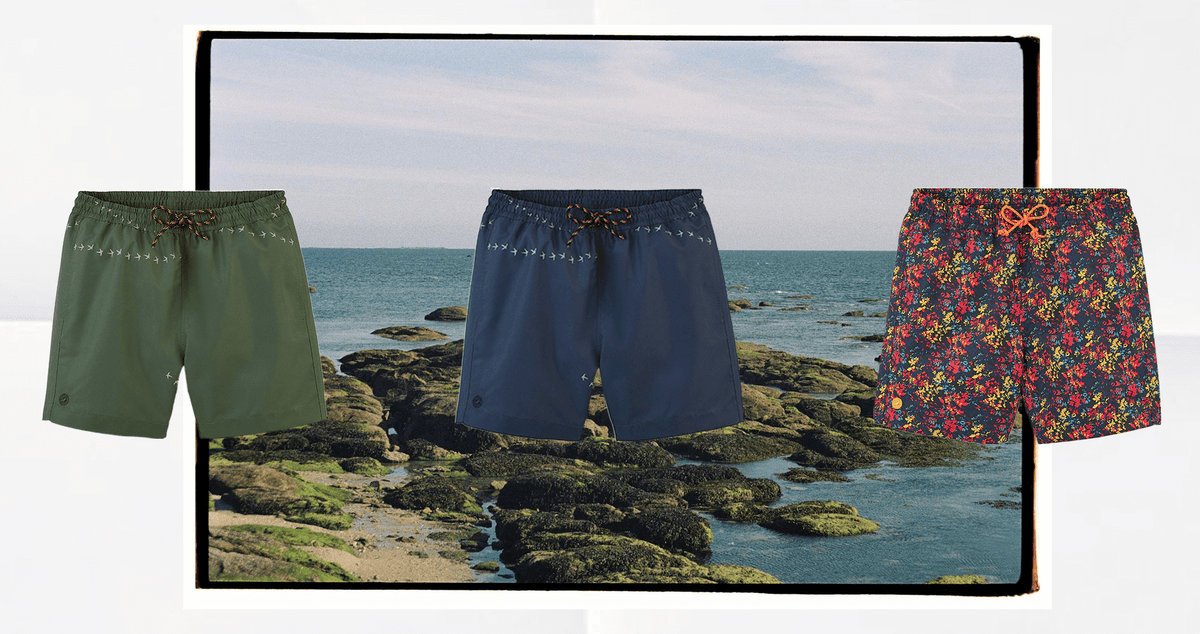
And because every detail counts: on the NAVY and THYME versions, the drawstring comes from production scraps (partnership with Cousin Trestec) and its color is random. The embroidered bird patches also vary from piece to piece: no two shorts are exactly alike.
Available in three versions – blue (NAVY), green (THYME), or floral pattern – the KAJA shorts suit every mood. Its classic cut makes it an easy piece to wear, whether at the beach, on a water hike, or paddleboarding.
A responsible swim short deserves to be treated with care:
Wash at 30°C or 40°C max on a short cycle
Use a natural detergent
Air drying recommended
These actions extend the life of textiles and reduce the release of microplastics into the water.
SEAQUAL INITIATIVE, our partner on this line, goes beyond conventional recycling. Unlike other players who use plastic collected on land, SEAQUAL works directly with ocean, beach, river, and estuary cleanup initiatives to extract plastic already circulating in aquatic ecosystems.
Today, according to Seaqual Initiatives, 4.6 billion tons of plastic are buried or scattered in our environment. Plastic production is booming, and every year, 14 million tons end up in the ocean. If nothing changes, by 2050 there will be more plastic than fish in the oceans. Every year, plastic kills millions of marine animals — a global ecological disaster.
And this concerns us directly: we ingest on average the equivalent of 50 credit cards per year through water, food, or the air we breathe.
SEAQUAL INITIATIVE takes concrete action to reverse this trend. Its goal: to transform marine waste into high-quality recycled materials and create a true value chain around marine pollution cleanup.
SEAQUAL INITIATIVE collaborates with ocean, beach, river, and estuary cleanup projects worldwide. These initiatives bring together entire communities that refuse to accept plastic bags, bottles, or fishing nets as a common backdrop in our daily lives.
Unlike many companies that focus on at-risk plastic waste (OBP – Ocean Bound Plastic) often located up to 50 km inland, SEAQUAL INITIATIVE tackles the problem at its core by collecting waste already present in aquatic environments. This is where it poses the greatest threat to marine wildlife.
To have a real impact, SEAQUAL INITIATIVE focuses on areas where waste management is insufficient, usually due to the lack of infrastructure or foreign waste deposits. By creating local collection points and a vertical supply chain, the initiative helps reduce the carbon footprint while supporting the local economy.
Marine plastics are more complex to recycle. Even though they can persist in the ocean for centuries, UV rays, saltwater, and friction accelerate their degradation. That is why SEAQUAL INITIATIVE is specifically dedicated to valorizing plastic bottles found in the sea, rivers, and estuaries.
The process notably includes mass dyeing (dope dye), significantly reducing water use and microplastic release. The initiative also explores possibilities for chemical recycling to expand the use of its materials and increase their circularity.
The ambition of SEAQUAL INITIATIVE goes beyond recycling. It is part of a global and coherent approach to environmental, social, and governance (ESG) impact. Reducing waste, supporting local communities, and creating a circular economy around marine pollution cleanup are the pillars of its commitment.
Made from recycled marine waste and plastic bottles
European production (Spain, Portugal)
Comfort, style, technicality
In partnership with SEAQUAL INITIATIVE
Buying the KAJA swim shorts is not just choosing a garment: it’s a commitment. It’s supporting a circular, local, and environmentally respectful model. It’s choosing a durable product that helps preserve what we love: wide open spaces, the sea, nature.


