



Norway - between skiing and sailing (Episode 1)
|
Cart
To go further:
|
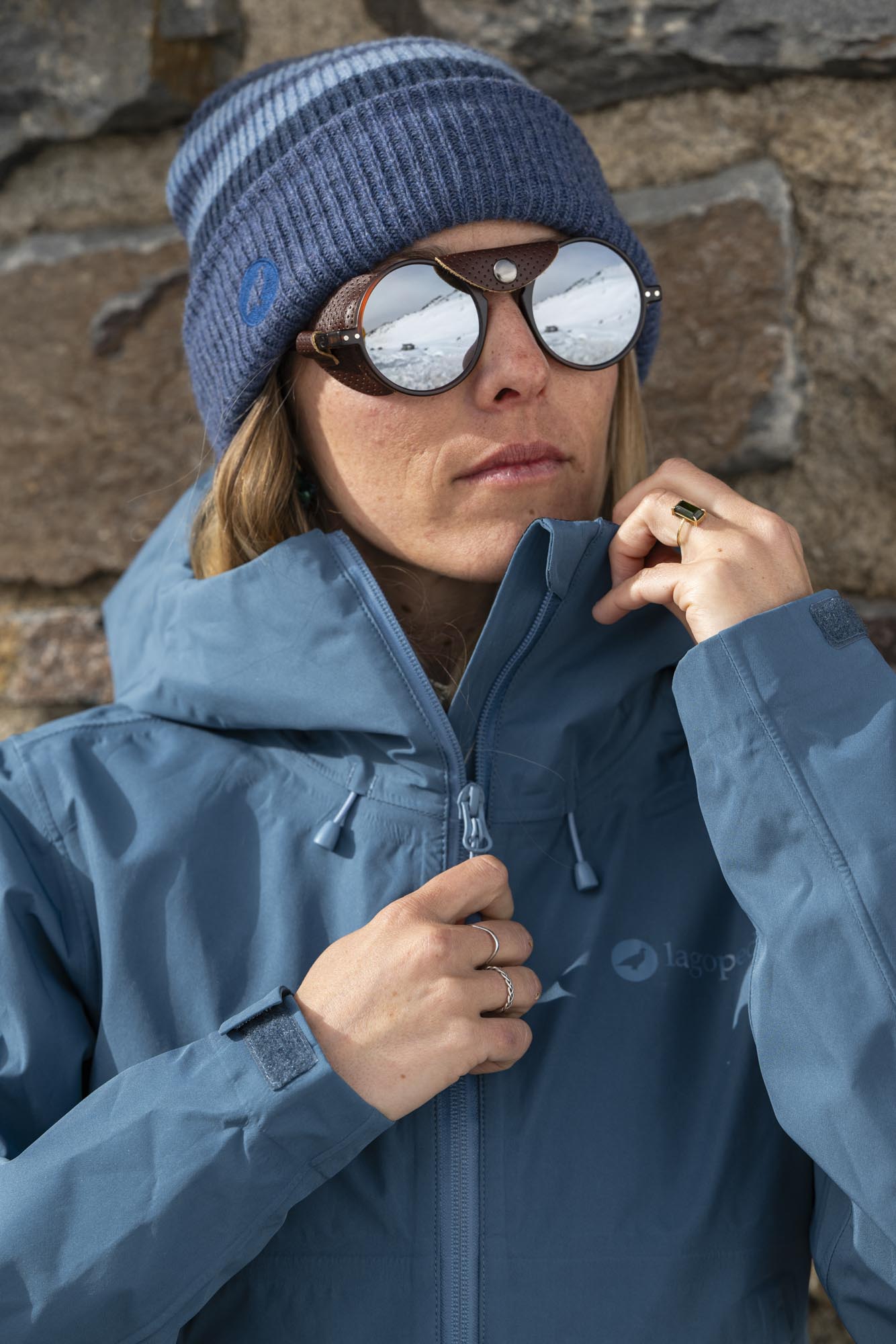
While I was discovering the Lyngen Alps in March 2023, I met a strange sailor in a café by the port of Tromsø. Ulysse, no joke, captain of the LUN II (pronounced "loon"), wears a blue woolen beanie and a leather jacket. He offers me a thick, calloused hand that makes my own hands feel like a child's. Leaning on the bar, he talks with Léo Viret, a friend and fellow guide trainee. The conversations are lively, but the presence of the Lun II, Ulysse’s boat, often comes up. Ulysse’s apparent adventurer life leaves me skeptical: is it really possible to sail a 1914 boat without any electronic assistance? Is it feasible to return to port under sail with a nearly 30-meter boat? I am suspicious. What if it’s not true? What if behind that leather jacket hides a city dweller craving adventure and recognition, freshly turned sailor, quick to tell his stories?
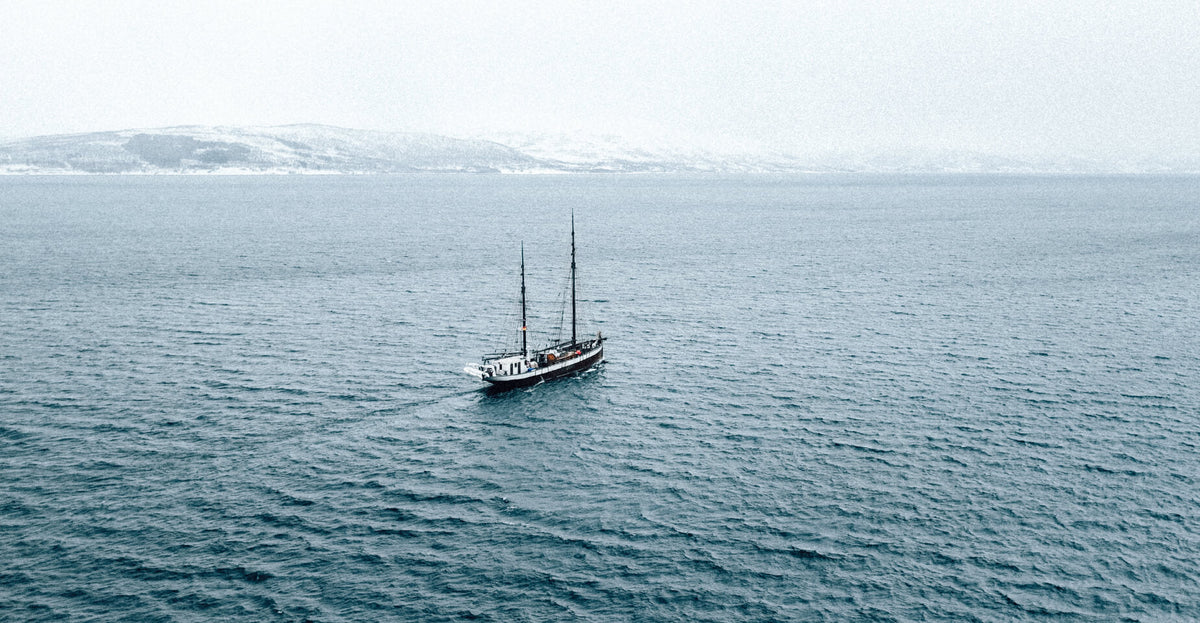
A few moments later, I am invited aboard the famous boat with the crew. In the darkness, the Lun looks immense and gives me the impression of having stepped straight out of a tale, a Viking movie. The wooden rigging, the burgundy red cotton sails, the tiller equipped with a block rigged with hemp ropes. My first steps on the stairs leading to the cabin, deep inside the boat, creak and a familiar smell brings back memories: the scent of an old refuge. On the walls lining this descent, watercolors on paper that looks like parchment, dog-eared, depicting the Lun under sail, and a library of sea books that seem to date from the 19th century.
The living area, the cabin, is centered around a large wood stove and a table the width of an arm. On either side of the cabin, bunks: stacked individual beds equipped with a curtain, thick animal skins, and a down feather sleeping bag. Everything here is from another time. The captain moves about in the bow of the boat: he cooks amid hanging legs of lamb, fish drying next to seal skins, and the week's skiers. I am amazed that these two worlds can coexist, even blend.
What strikes me is the presence in all discussions of an invisible crew member. And yet so visible. A person not made of flesh, but of wood: the boat. Ulysses talks about his ship as a full-fledged sailor. "It is happy when it has wind in its sails," the creaks and its behavior at sea showing its recognition towards its sailors who live and work within it. The Lun is a living being.
After a puree of split peas topped with a slice of cod, itself covered with a thin slice of smoked salmon and roasted hazelnuts, the captain slips away, cigarette in mouth. He calls out "boys" as if he were an old woman herself, like the owner of a tavern in an old French village. Reincarnation may not be the exclusive domain of Indian peoples? Yet, the strong and lively body shows the physical activity of a top-level judoka... The mystery of the character remains intact, for now. It is his second-in-command who takes over the story, also with a cigarette at the corner of his lips, a coffee mug in hand. Smoking is encouraged on the boat, "it kills the mold." An unreal atmosphere reigns in this cabin. It is he who resumes the tale and tells us about the exploits of his Captain.
Crossing the Atlantic loaded with rum and coffee sailing on his century-old boat, with wild sea conditions, maneuvers worthy of old sailors like in the sea novel "Two Years on the Forecastle" by Dana… Isn’t it the very essence of humility to keep one’s own exploits quiet and let others speak of them? My doubts and suspicions have obviously vanished since I set foot on this fabulous ship. But I was far from imagining what the future held for me.
Bastien Levy - Lagoped Family
A high mountain guide since 2022 and canyoning instructor since 2023, Bastien is a true adventure enthusiast. He supports many associations and expeditions with the goal of sharing his expertise and values.


