




The rock ptarmigan, finally a protected species alongside the capercaillie
|
Cart
To go further:
|
On Tuesday, September 8, 2026, a decree is published in the Official Journal of the French Republic. It adds two birds to the list of protected species: the rock ptarmigan and the capercaillie. The first addition since 2009. The list includes more than 250 species, among the most iconic of France's wildlife, and had not changed in fifteen years.
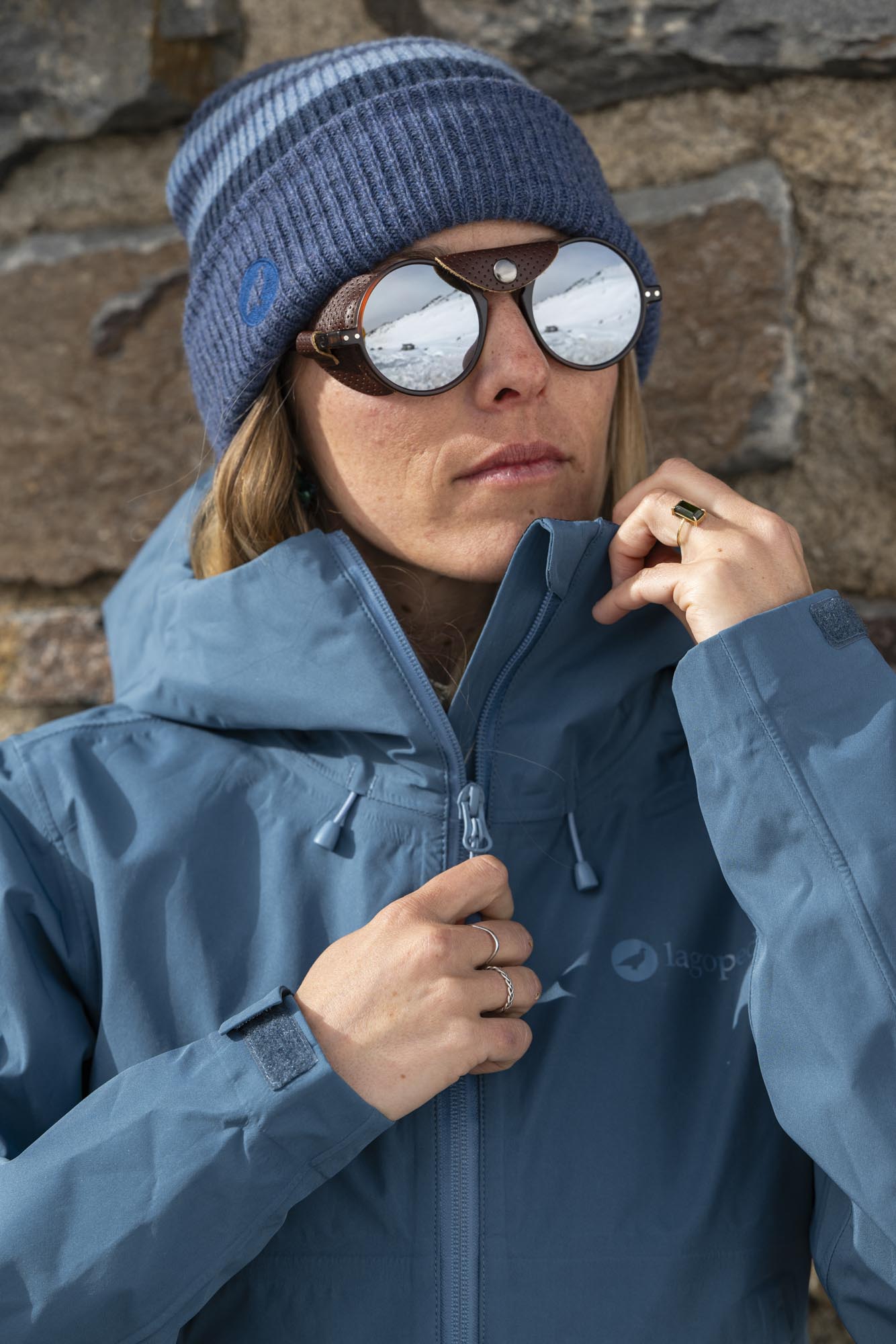
For Lagoped, this is a date that matters. Our name is no coincidence: it pays tribute to this extraordinary bird, this sentinel of the summits that we encountered over the course of our ascents. Seeing the rock ptarmigan officially protected by law means seeing a long and difficult campaign come to fruition.
The rock ptarmigan, also known as the snow partridge, is a small grouse the size of a partridge that lives between 1,800 and 3,000 meters above sea level in mountain ranges across the Northern Hemisphere. It is a true glacial relic: it survived the warming at the end of the last Ice Age, 10,000 years ago, thanks to a remarkable adaptation. Its plumage changes color with the seasons—white in winter to blend into the snow, and mottled brown in summer to disappear among the rocks and alpine vegetation.
Its way of life is discreet and frugal. It uses only what it needs and takes only what its environment can provide. This is the DNA we wanted to embody in our brand: using recycled materials produced in Europe, banning fluorinated compounds from our membranes, and designing long-lasting clothing.
Our mission is simple: to ensure that humans leave nothing behind in the mountains but the imprint of their footsteps.
The figures provided by experts are unequivocal. According to the League for the Protection of Birds, the rock ptarmigan survives in France only in the Alps and the Pyrenees, in the form of isolated and fragile populations. Since 1950, it has disappeared from 33% of Alpine municipalities and 21% of its range in the Pyrenees.
This grouse faces a triple threat. Climate change is reducing its habitat and making its white camouflage unsuitable on snowless ground. The fragmentation of its territory by human infrastructure. And disturbance caused by recreational activities, which disrupts its critical breeding cycle. The rock ptarmigan is listed on the IUCN Red List, and every individual counts for the survival of isolated populations.
As for the western capercaillie, Europe’s largest wild bird, its decline in France has been dramatic, with populations falling by nearly 80% since 1960 in the Pyrenees, where the species now survives only in fragile populations. A few remnant populations persist in the Jura and the Vosges.
A reintroduction plan was launched in the Vosges in 2024 using birds from Norway, but it will not continue: almost all of the relocated birds died. A fragile sign that the species has not completely disappeared from the Vosges massif, births were nevertheless recorded in June 2026 by the Ballons des Vosges Regional Nature Park.
Today’s decision goes far beyond the five-year hunting moratorium imposed by the Council of State in March 2026. The rock ptarmigan and the western capercaillie have been classified as protected species in France, making them non-huntable and also protecting their nests and habitats, according to an order published Tuesday in the Official Journal.
Protection is now total and permanent. It covers not only the birds themselves, whose destruction, capture, or removal are prohibited, but also their eggs and nests, as well as their breeding sites and resting areas.
This is a fundamental change in status: we are no longer talking about a temporary suspension of hunting, but about inclusion in ordinary law alongside the peregrine falcon, golden eagle, bearded vulture, and kingfisher.
Minister for Ecological Transition Monique Barbut defended this classification as a necessary decision. She specified that this status would make it possible to draw up a ten-year protection plan and facilitate European funding.
On the objectives, she was cautious but honest: "The idea is to stabilize populations, and perhaps even hope for a recovery, although that will remain difficult."
The president of the LPO, Allain Bougrain-Dubourg, welcomed the decision with a phrase that aptly sums up the moment’s ambivalence: "A small step for the administration, a giant leap for nature protection."
This decision did not come out of nowhere. It follows the determined campaign led by the League for the Protection of Birds, One Voice, and the Ariège Ecological Committee.
Years of legal proceedings and unanswered warnings passed before the Council of State ruled in March 2026 to order a suspension of the hunt. And now, on this Tuesday, September 8, protection is taking another step forward: it is enshrined in law, with all that this entails in terms of habitat sanctuarization.
According to Marie-Paule de Thiersant of LPO Isère, this urgency must also extend to other species such as the black grouse and rock partridge.
Legal protection for the rock ptarmigan is a victory. It is not the end. Hunting accounted for only part of the pressure placed on the species. Climate change continues to shrink its high-altitude habitat. Snow melts earlier, summers are longer, and the ptarmigan's white plumage becomes a disadvantage against brown ground.
As mountain sports enthusiasts, we can take concrete action to reduce winter disturbance, which can be fatal for a bird that conserves every calorie to survive temperatures as low as -35°C.
Every action counts for a bird whose energy is measured to the calorie in winter.
At Lagoped, we believe that naming the animals of our mountain ranges on our clothing creates a connection. Anyone wearing a TEETREK or a RIOUPOU on the slopes knows there is a story behind these names. The rock ptarmigan protected by law—that is good. The rock ptarmigan protected, known, and respected by mountain enthusiasts—that is better.
The Lagoped brand will continue to champion this emblematic bird. By choosing clothing designed to last and respectful of the ecosystem, you are taking part in this broader movement. The mountains welcome us; they do not belong to us. It is time to treat their inhabitants with the respect they deserve, so that future generations may still have the chance to catch a glimpse, around a snow patch, of the discreet silhouette of the rock ptarmigan.
Useful links to learn more:
Related product
Unisex T-shirt HAPPY DOVE
€55,00


