



Why Lagoped does not use organic cotton
|
|
For several years, fashion industry trends have favored more environmentally friendly materials, which is very good news. Eco-responsible fashion and/or the outdoor sector have thus seen the rise of organic cotton, recognized as having a better environmental impact than conventional cotton. At Lagoped, our commitment to sustainability and circularity is even stronger and goes beyond these trends since we have chosen an alternative path by rejecting organic cotton in favor of recycled cotton, which aligns better with our ecological and ethical values.
We review our material choices to help you understand the environmental and ethical challenges of organic cotton and discover eco-friendly alternatives.
In the fashion industry, cotton is an omnipresent material due to its excellent textile properties. It is obtained from a natural plant fiber derived from the fluff surrounding the seeds of the cotton plant, grown in many regions around the world. A natural resource that has been a boon for the clothing industry.
Why is cotton so widely used in textile manufacturing? The primary reason is undoubtedly its comfort and breathability. Cotton offers a soft touch and allows air to circulate between its fibers, providing comfort in warm weather. Cotton fiber is used for all types of clothing: from t-shirts to underwear. Additionally, cotton absorbs moisture well from the skin and helps keep the skin dry.
On the manufacturing side of a garment, cotton fiber can be used alone or blended with other fibers to enhance the fabric's qualities, and it easily lends itself to dyeing and printing. Generally, it is durable and offers a longer lifespan for the garment. One last advantage, and not least, is the ease of care for cotton fiber: it does not require special treatment.
However, as you might expect, conventional cotton fiber farming has considerable negative impacts on the environment. That is why organic cotton and other alternatives are gaining popularity.
Organic cotton is grown following organic farming methods, meaning without the use of pesticides, herbicides, synthetic chemical fertilizers, or genetically modified organisms (GMOs). The goal of organic farming is to minimize environmental impact while promoting sustainable agricultural practices that respect biodiversity.
Thanks to the use of organic methods, it is recognized that organic cotton production has advantages compared to non-organic cotton manufacturing, namely: reducing the impact of pesticides and fertilizers on the environment and farmers' health, encouraging biodiversity and crop rotation, improving soil quality, reducing carbon footprint, and better compensation for farmers.
However, organic cotton production still has drawbacks. Like many organic productions, the manufacturing of organic cotton fiber yields lower outputs than conventional farming, leading to high production costs and requiring farmers to obtain expensive organic certification. Beyond these drawbacks, the demand for organic cotton is still too low compared to the overproduction in the clothing industry, which is moving at two speeds. Moreover, for many manufacturers, relying on cotton production is risky: since cotton is a natural fiber, it is subject to weather hazards, pests, and harvests can be damaged. That is why polyester is currently the most used material and was nicknamed the "magic fiber for the textile industry" when it emerged in the 1950s, as it offered many advantages.
At Lagoped, because we refuse to produce our clothing from the extraction of new natural raw materials, we have chosen to make our sweaters, shirts, and t-shirts from recycled cotton. Thus, we reuse existing materials rather than producing new fibers. The benefits are significant: it means minimizing the amount of textile waste and reducing dependence on virgin raw materials.
Find all our commitments in detail
Recycled cotton, as its name suggests, is made from cotton fibers recovered from textile waste. The production of these new recycled cotton fibers involves collecting used clothing, production waste, or end-of-life textile products. With nearly 130 billion garments consumed annually according to an Oxfam study (2020), there is plenty to work with!
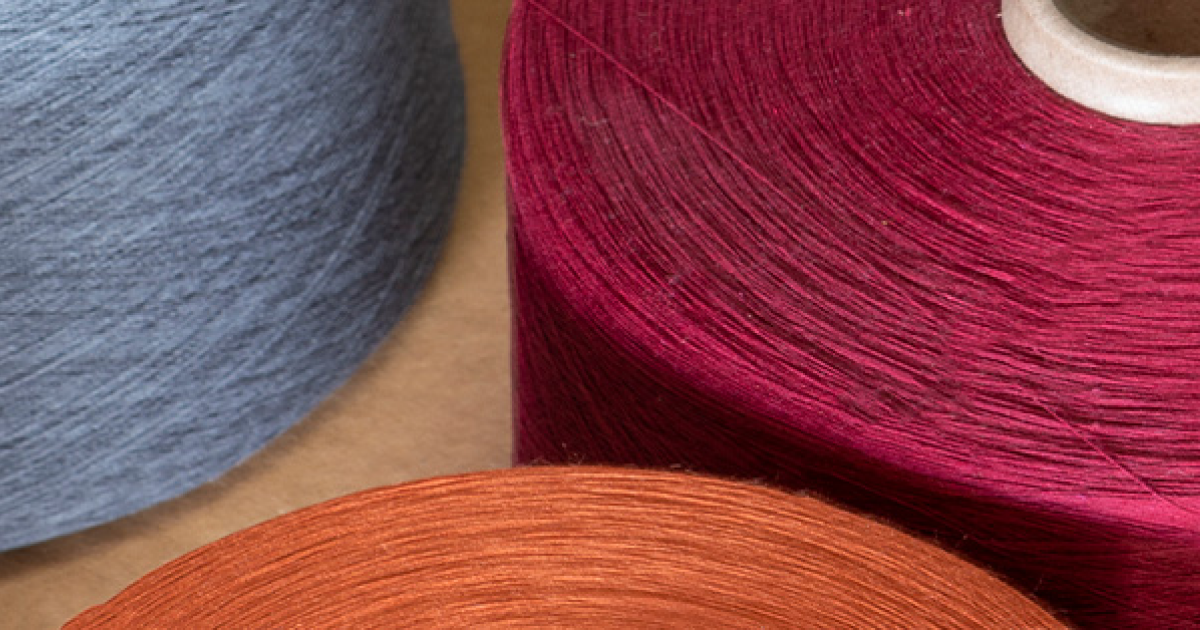
The collection of cotton textiles used in our clothing is carried out in Spain, by our partner EcoLife by Belda Llorens. Our partner collects the fabrics, sorts them by composition and color, cleans them to remove impurities, grinds them, and mixes them with other fibers to create a new high-quality yarn, thus maintaining the entire circular process.
The production of clothing from recycled cotton relies on reusing fibers from existing textiles, so it is no longer necessary to grow new cotton crops, which requires less water and energy by avoiding the intensive growth phase of cotton farming.
The choice of recycled cotton in the manufacture of Lagoped clothing responds to several of our commitments. First and foremost, reducing the environmental impact of the industry, which means no longer extracting new natural raw materials to offer adventure clothing that does not harm Nature.
However, our t-shirts are not made solely from recycled cotton: since the cotton fiber is shortened, it loses strength. Lagoped has therefore chosen to use a blend of materials (recycled cotton and recycled polyester). This is a deliberate choice because recycling the material is more difficult than with a single fiber.
Credit photo: EcoLife by Belda Llorens


