



When mountaineering rhymes with tenacity: the ascent of Nanga Parbat (8125m) by Tiphaine Dupérier
|
|
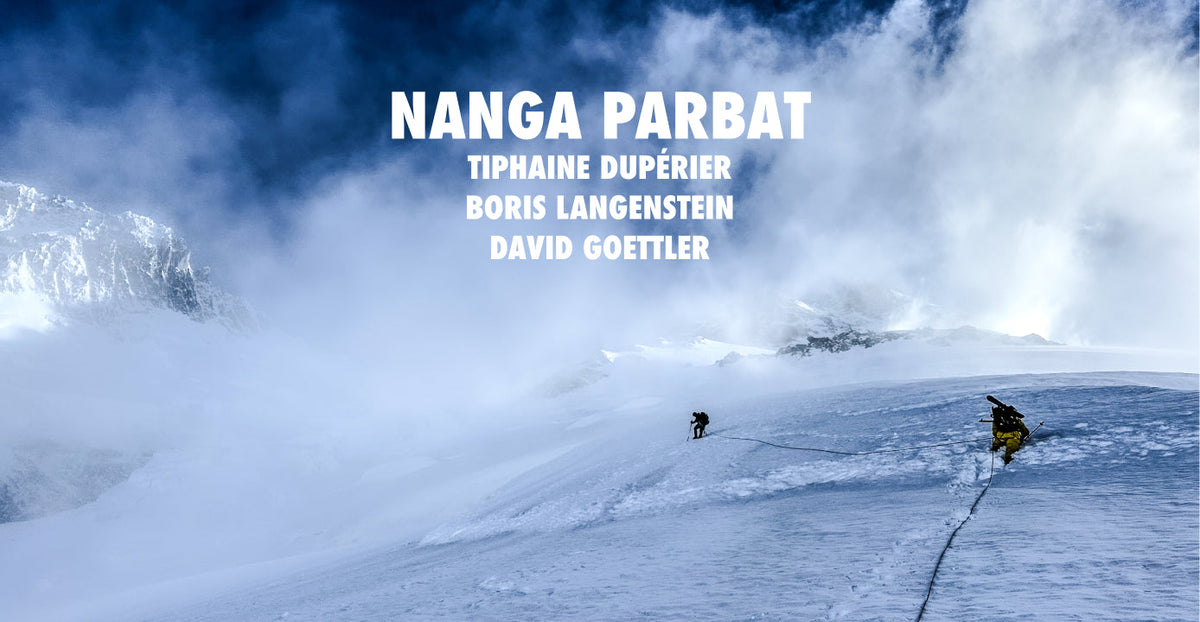
After 17 days spent at the base camp of the Rupal face of Nanga Parbat, the team composed of Tiphaine Dupérier and Boris Langenstein achieved a historic first: the ski descent of this legendary face, never before skied, after a shared ascent with David Goettler. Leaving on June 21 at 1:30 a.m., the trio reached the summit of the 8125-meter Himalayan peak on June 24 at 3:30 p.m. That day marked a decisive turning point: between the faces, between the ascent and the commitment to the descent. Skis were put on at the summit for a three-day descent to the base camp. All done in alpine style: without oxygen, fixed ropes, or porters. A seven-year dream finally comes true for Tiphaine Dupérier and Boris Langenstein.
Although exceptionally low snowfall and high heat prevented a full descent — the last 2500 meters marked by rockfalls, downclimbing sections, and poor quality snow — the upper part of the route, from 8125 to 6000 meters, offered stable and skiable conditions. Enough to allow the team to make a new mark in the history of mountaineering and steep slope skiing on the flanks of the "Pakistani monster."
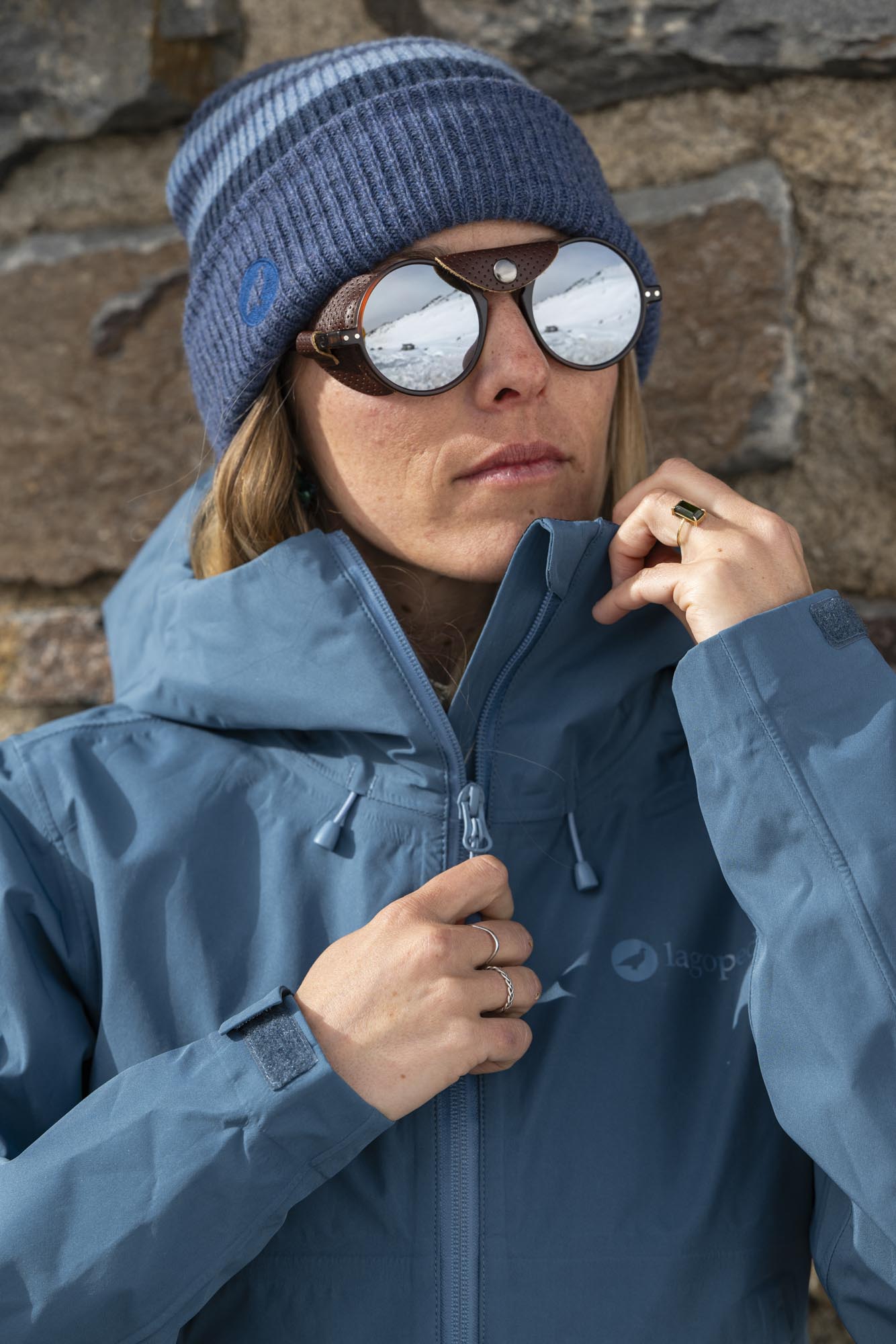
Expedition story with Tiphaine Dupérier, member of the Lagoped Family.
On June 21, 2025, Tiphaine Dupérier sets off again towards a summit that has been close to her heart since 2019. For several years, this project has stuck to her, followed her, waited for her. A first unsuccessful attempt, a second aborted… and finally, this third one, which this time will succeed. “When it works, it’s great.”
Because the success of a major high mountain project is never just a matter of luck. It is the result of long work, a lot of patience, perseverance, and meticulous preparation. This success is also a turning point for Tiphaine.
Tiphaine Dupérier is no stranger to summits. But she has been waiting a long time for this expedition. Already in 2019, she attempted the ascent from another side. Then in 2024, a new attempt. Without success. In 2025, with two climbing partners — David, an 8000m expert, and Boris, a longtime partner — she gives herself another chance.
It all starts with a strategy: June 24 is announced as a perfect weather window, windless. So the departure is on the 21st. The goal: to climb progressively each day, camp after camp, to reach the summit right on time. It is the anticipation of weather and logistics that sets the pace of the ascent.
On June 21, departure from base camp at 1:30 a.m. You have to avoid the sun on the south face, where rockfalls are frequent. 2500 m of positive elevation gain all at once. Arrival at camp 1 at 6000 m. The altitude is already serious, and the effects begin to be felt. The daytime heat prevents rest. You have to be clever: makeshift parasols with the sleeping bag, blankets over the tent… and drink, always.
On June 22, ascent to camp 2 at 6800 m, on a large, monotonous snow slope. Mentally tough, physically demanding, because you have to break trail, without assistance, without sherpa. But this time, the mountain is less snowy than in 2024. It goes better. The motivation is intact.
On June 23, it gets serious. From 6800 m to 7300 m, the slope steepens, the terrain becomes technical. There is no one around. No fixed ropes, no obvious route. You have to read the mountain and draw on your reserves. The altitude eats away at appetite and energy, but a good night at camp 3 restores some strength for what lies ahead the next day: the summit.
On June 24, departure again at night. At 1:30 AM, the rope team starts the final ascent. After an hour, the most delicate section: mixed climbing, between ice and rock. Exposed, physical, technical. But once passed, a strange feeling: they have crossed to the other side of the mountain. Going back would no longer be a simple option.
This is what commitment in high mountains means.
When the sun rises, it’s a relief. A long snow crossing leads to the rocky bastion below the summit, a few last climbing steps, and at 3:30 PM, the three climbers finally reach their goal.
“It’s good, we did it.”
There are no tears, but big smiles, euphoria, a deep relief. David marks his 5th attempt, Boris his 2nd ascent, and this time, Tiphaine is at the summit with him. A beautiful loop closed.
David prepares his paragliding descent and starts on foot. Tiphaine and Boris put on their skis. It’s not over. At 7600 m, they meet David, help him inflate his wing. He takes off, “like a bomb,” and makes a magical descent in the golden lights of the sunset.
It’s late. Night falls. Fortunately, they planned ahead. A tent, an inflatable mattress, a stove. An improvised night on the west face, in peace, to regain strength before continuing.
The next day, the wake-up is tough. Another technical crossing. Then the ski descent, described as a “battle.” The explosiveness required by skiing doesn’t mix well with the altitude. Every three turns, a break. Out of breath, legs on fire. But making turns on the snowy ridge of the summit is magical. It’s rare. And Tiphaine Dupérier will remember that for a long time.
This project is not just a performance. It’s a story of a climbing team, of trust, of mutual respect. With Boris, Tiphaine shares 10 years of expeditions. Their bond no longer needs words. Each knows how the other works, anticipates, supports.
With David, whom she knows less but admires for his 20 years of experience, Tiphaine discovers another form of trust: the one inspired by the mastery and calm of an expert. Together, they form a balanced, effective team.
“We support each other, listen to each other, take turns breaking trail. That’s what allowed us to succeed.”
She didn’t think she could go this far. She did it.
Physically, this is her biggest achievement.
Mentally, she confirmed what she knew: with the right team, everything becomes possible.
And to the young mountaineers, she passes on this message:
“This success is proof that you must not give up. It doesn’t work by snapping your fingers. You have to be patient, persistent. Build project after project, put the pieces of the puzzle together. And one day, it works.”
Tiphaine Dupérier
The skier, Tiphaine is a guide in Tarentaise and originally from the Bauges Massif. She feeds off the very high peaks she climbs and skis down.


