



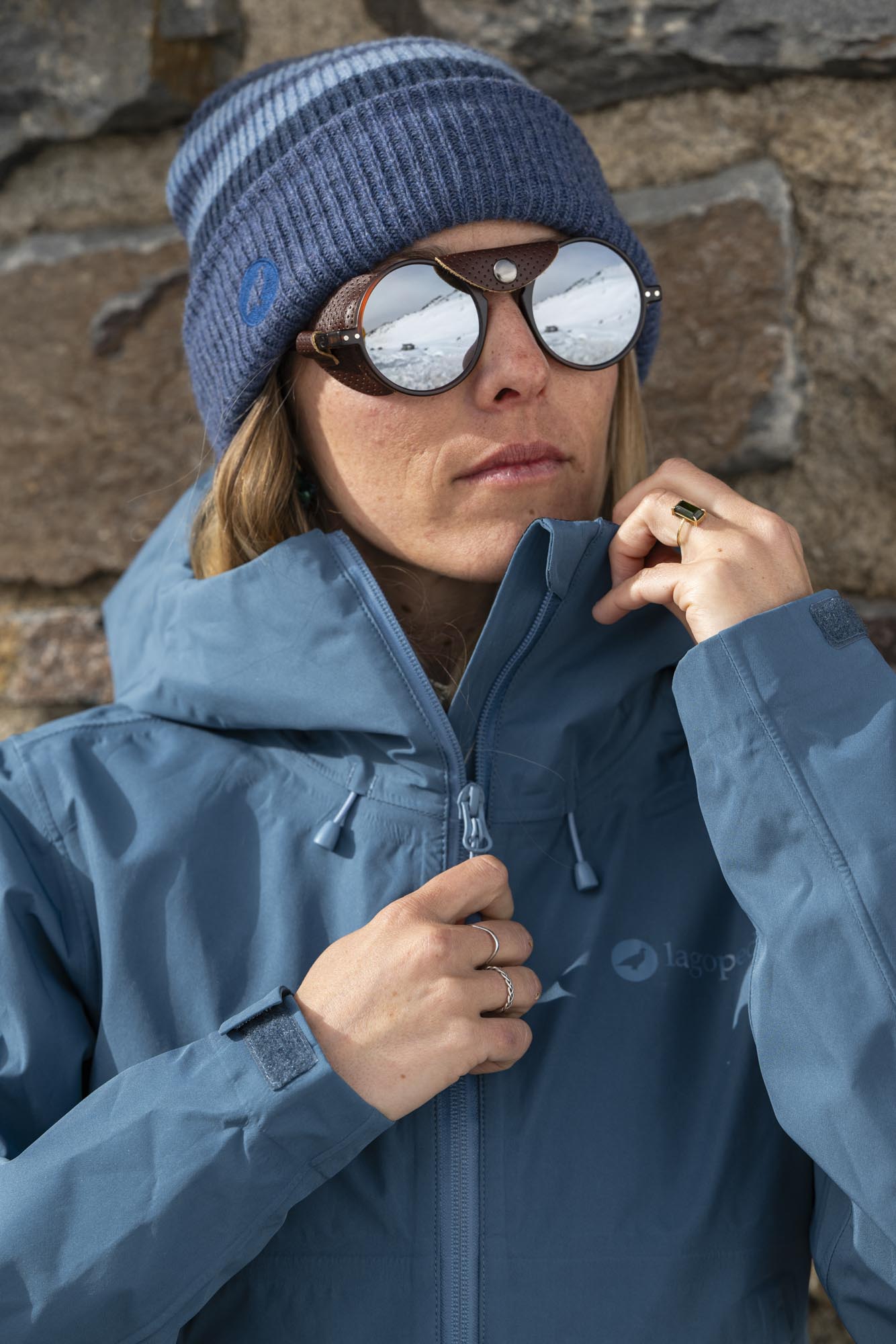

Down jacket and thermal insulation: how to choose the right one?
|
|
When practicing outdoor activities, choosing the right down jacket is essential to ensure both comfort and performance. Whether during a mountain ascent, a day of skiing, or a bivouac in the wild, thermal insulation and moisture management play a crucial role. Between down, synthetic fill, weight, breathability, and other technical criteria, it’s not always easy to find your way. This article guides you through the different aspects to consider to choose the ideal down jacket based on your activity and needs.
Summary
During outdoor activities, our body acts like a real boiler, producing heat through metabolism and muscular effort. But this heat is constantly threatened by external elements: it escapes by radiation, dissipates when in contact with cold air by convection, escapes at the slightest contact with a cold surface by conduction, and disappears as sweat through evaporation. To maintain a stable body temperature around 37°C, the body adjusts blood circulation by warming or cooling the skin as needed. In the mountains or in cold weather, these mechanisms are put to the test, and poor thermal balance can quickly lead to discomfort or even hypothermia. The challenge? Finding the right gear to retain heat when it’s cold without overheating during intense effort.
One of the biggest challenges in the mountains or in cold weather is fighting against body cooling, especially when the effort decreases: a prolonged break, reaching the summit, or a poorly planned bivouac can quickly cause body temperature to drop. Moisture – whether from rain, snow, or sweat – increases this heat loss. The wind further intensifies this chilling sensation with the wind chill effect, making it feel much colder than it actually is.
To deal with this, it is essential to adopt the three-layer system: a first breathable layer to wick away moisture, an insulating layer to retain heat (like a warm down jacket suitable for exertion), and an outer windproof and water-repellent layer to protect against the elements. This is where the technical down jacket comes into play: designed for extreme conditions, it offers a good balance between insulation, breathability, and lightness. And to combine performance and commitment, eco-friendly down jackets, made from recycled materials, allow you to stay warm while limiting your environmental impact. Choosing your down jacket well and knowing when to put it on is therefore crucial to avoid ending up wet, freezing... and potentially in danger.
If cold is a threat in the mountains, excess heat is just as much. Too much intensity can cause excessive sweating, with a double consequence: loss of water and minerals, and above all, wet clothes that will become freezing when stopped. Sweating in winter means condemning yourself to shiver later. Cold air also reduces the feeling of thirst, which can lead to progressive dehydration, affecting performance and increasing the risk of hypothermia.
The solution? Anticipate and regulate body temperature. Adjust your pace to avoid excessive sweating, but also use ventilation zips and adjust your layers accordingly. For example, Lagoped waterproof jackets are equipped with underarm zips to allow ventilation without compromising protection. Finally, drinking regularly, even without feeling thirsty, is essential to maintain good hydration balance.
In the mountains, wind is an invisible but formidable enemy. It accelerates body heat loss by replacing the warm air in contact with the skin with cold air, a phenomenon known as "Windchill." Specifically, a temperature of 0°C with a 30 km/h wind feels like -10°C, making the cold much more biting than it actually is. The stronger the wind, the faster the heat loss, increasing the risk of chilling and hypothermia.
To protect yourself, it is essential to wear a windproof outer layer, such as a softshell jacket for intense activity or a waterproof hardshell for more extreme conditions. Don’t neglect the extremities either, as a large amount of heat escapes through the head and hands. Gloves, hat, and neck warmer then become essential allies to retain as much heat as possible.
The choice of insulation is a key element in the design of a technical down jacket. It determines not only the level of thermal performance but also the environmental impact of the product. Natural down is often favored for its excellent warmth-to-weight ratio and high compressibility, ideal qualities for a warm down jacket. However, it loses effectiveness when exposed to moisture and takes time to dry. Recycled down offers a more responsible alternative by reducing the demand for new animal resources while maintaining similar performance—although its availability is still limited.
Synthetic wadding, generally polyester-based, retains its insulating power even when wet, dries quickly, and offers better resistance to moisture — a major advantage in variable conditions. However, it is slightly less compressible than down. Recycled wadding has the same benefits while reducing the impact related to virgin fiber production. At Lagoped, we have chosen high-quality recycled synthetic wadding made in Germany, Bulgaria, or Slovakia from recycled plastic bottles. This material allows us to create eco-friendly down jackets that are high-performing, breathable, and suited to the most demanding conditions.
The thermal efficiency of a down jacket depends not only on the type of insulation used but also on the density of its filling, expressed in grams per square meter (g/m²). This density determines the jacket’s ability to retain heat. A light weight, between 20 and 40 g/m², is ideal for mid-season jackets or mid-layers. An intermediate weight (80 to 90 g/m²) corresponds to a versatile warm down jacket, suitable for most cold conditions. For extreme climates, a high weight (130 g/m² and above) is recommended, especially for high mountain activities or winter expeditions.
In a technical down jacket, insulation is often strategically distributed: denser filling around the torso helps retain heat around vital organs, while lighter weight on the arms promotes freedom of movement and prevents overheating. This smart distribution also improves breathability and reduces the overall weight of the garment.
At Lagoped, we designed the HEYDO2 down jacket with 200 g/m² recycled G-LOFT® filling, a high-performance technical wadding made in Europe. The result: an eco-friendly down jacket, ultra-warm, and breathable, designed for demanding environments and responsible adventurers.
The effectiveness of a down jacket does not rely solely on the type and weight of the insulation but also on how it is structured. To improve breathability without sacrificing warmth, some technologies, such as perforated insulation, incorporate small strategically placed openings. These perforations increase air circulation and reduce moisture buildup by up to 30%, while maintaining excellent thermal insulation. This process allows sweat to be evacuated more efficiently, thus avoiding the "sauna" effect during intense exertion.
G-LOFT®, used by Lagoped, goes even further with a spiral hollow fiber structure inspired by polar bear fur. This design allows trapping body heat while facilitating ventilation, ensuring optimal comfort. Unlike natural down, the synthetic fibers of G-LOFT® do not absorb moisture, which ensures effective insulation even in damp weather. Another major advantage: its "memory effect," which allows it to retain its loft and regain its original shape after compression, thus extending the durability and thermal efficiency of the garment. Additionally, G-LOFT® fibers are specially designed to prevent fiber migration, thereby extending the lifespan of our down jackets.
This specific construction, combined with the right choice of weight and an intelligent distribution of the insulation, makes Lagoped down jackets reliable allies for facing the most demanding environments.
The CLO value is a unit of measurement that evaluates the thermal insulation of a garment based on its resistance to heat. A CLO of 1 corresponds to an insulation level sufficient to maintain a comfortable resting temperature in a room at 21°C. The higher the CLO value, the more insulating the garment. For example, a garment with a CLO value of 2 to 3 will provide insulation suitable for moderate physical activities in cold conditions, while a down jacket with a CLO above 3 will be suitable for extreme winter conditions. CLO values help determine the thickness, loft, and breathability of the insulation, to choose the most suitable product based on climatic conditions and the type of activity.
At Lagoped, technical down jackets like the CORUJA model (CLO of 1 to 2) are perfect for physical activities, while models like the HEYDO2 (CLO above 3) offer optimal insulation for extreme conditions, such as winter expeditions. The GRAND TETRAS WARM jacket and the ski jacket URSK2 are ideal for activities combining active and static movements.
In short, the choice of the ideal down jacket depends on many factors, ranging from insulation to compressibility, as well as moisture resistance and lightness. Each type of insulation has its advantages and trade-offs, and it is important to understand them well to optimize comfort according to the conditions encountered. To find the down jacket perfectly suited to your needs, combining performance and practicality, refer to CLO values.
Stay warm, dry, and ready to fully enjoy your outdoor adventures!


