




Climbing in Morocco: a few weeks in Taghia
|
|
Nestled in the heart of the Moroccan Atlas, Taghia is a dream destination for climbers worldwide. Known for its spectacular big routes on limestone of rare quality, this Berber village attracts each year those seeking isolation, commitment, and vertical beauty. This is what motivated Florian, a high mountain guide, to go there after hearing enthusiastic stories from climber friends who returned conquered from their stay.
The idea was not a long-standing project but rather an opportunity born from an off-season in the Alps. Initially, he planned to go in autumn, a better time for climbing training. Ultimately, spring proved perfect: less crowded, still wild, with that clear and bright light that enhances the mineral beauty of the place.
Florian is familiar with big routes, which he loves for the commitment they require and the concentration they demand. In Taghia, anchor points are spaced out, the climbing is technical, often on steep walls or thin slabs. But the high mountain atmosphere, the preserved environment, and the impeccable rock make it a demanding but deeply inspiring playground. Far from being completely isolated, the village is only two hours on foot from the most remote cliffs, allowing a constant connection to a form of civilization.
For this trip, he was accompanied by a friend, also a guide and a member of mountain rescue. An experienced, complementary duo, ready to discover the wonders of the Atlas.
The trip begins in Marrakech, then continues by taxi to Zaouiat, the gateway to the valley. It is there, every Monday, that the souk comes alive, a true theater of exchanges where you can find anything and everything, in a joyful tumult of colors and scents. Arriving at night, the market lights were off, but the echo of its bustle lingered in the air.
The journey continues by 4x4 on a recently opened track, gradually replacing the mules of the past. Entering the valley, silence settles in. Upon arrival in Taghia, the cliffs, invisible in the night, still cast their monumental shadow on the starry sky. Only the distant bray of donkeys and the call to prayer from the mussem disturb the village’s tranquility.
At dawn, the magic happens. Tall ochre cliffs surround the earthen houses, and the contrast between the rock, the sky, and the greenery of the crops is striking. The atmosphere is unique, both harsh and gentle, austere and welcoming.
In Taghia, days start early. Departure from the village is usually around 8 am, sometimes much earlier depending on the route. Approach hikes range from 15 minutes to an hour and a half, often marked by passages carved into the rock by the Berbers: suspended ledges, narrow gullies, dizzying natural viaducts. Each adds to the adventurous atmosphere.
Over two weeks, 13 big routes were climbed. One day was spent at the souk, and another resting after an unexpected snowfall. Afternoons, back at the lodge around 2 or 3 pm, were spent napping, reading, chatting, or meeting people in the village.
Among the memorable routes, Les Rivières Pourpres (7b+ max) left a strong impression. Renowned and stunning, it offers technical and fluid climbing up to a demanding finish. Axe de Mal (7c max) also stood out, with its 500 meters of continuous steep wall. In contrast, Haden Oder Sein (6b+ max) offers a vertical journey on eroded orange limestone, spectacular but abrasive on the fingers.
Some sections required particular inventiveness. On the Berber Style route, a slab traverse (6c) initially seemed almost impossible: smooth, without texture, with distant bolts. Neither Florian nor his partner could free climb it. An unexpected solution finally emerged: an improvised pendulum technique. Two days later, a guidebook found in another lodge showed a clock drawn next to this pitch, as a nod to their intuition.
Beyond the cliffs, Taghia is also a place of meetings. The villagers have hospitality ingrained in them. Mint tea, shared conversations, little helping hands: the relationship between climbers and locals is based on simple and sincere hospitality.
One encounter in particular marked the stay: that of Armed, a man who lives alone a 40-minute walk from the village, in a house he built with his own hands. He spends his days breaking stones, surrounded by mountains. Passing climbers are a brief respite for him, and he offers them tea as a gesture of silent friendship.
With the hosts of the lodge, bonds were naturally formed. Shared tea, French lessons for the children, help building a stone wall: many small moments that take on precious value when you step away from everyday life.
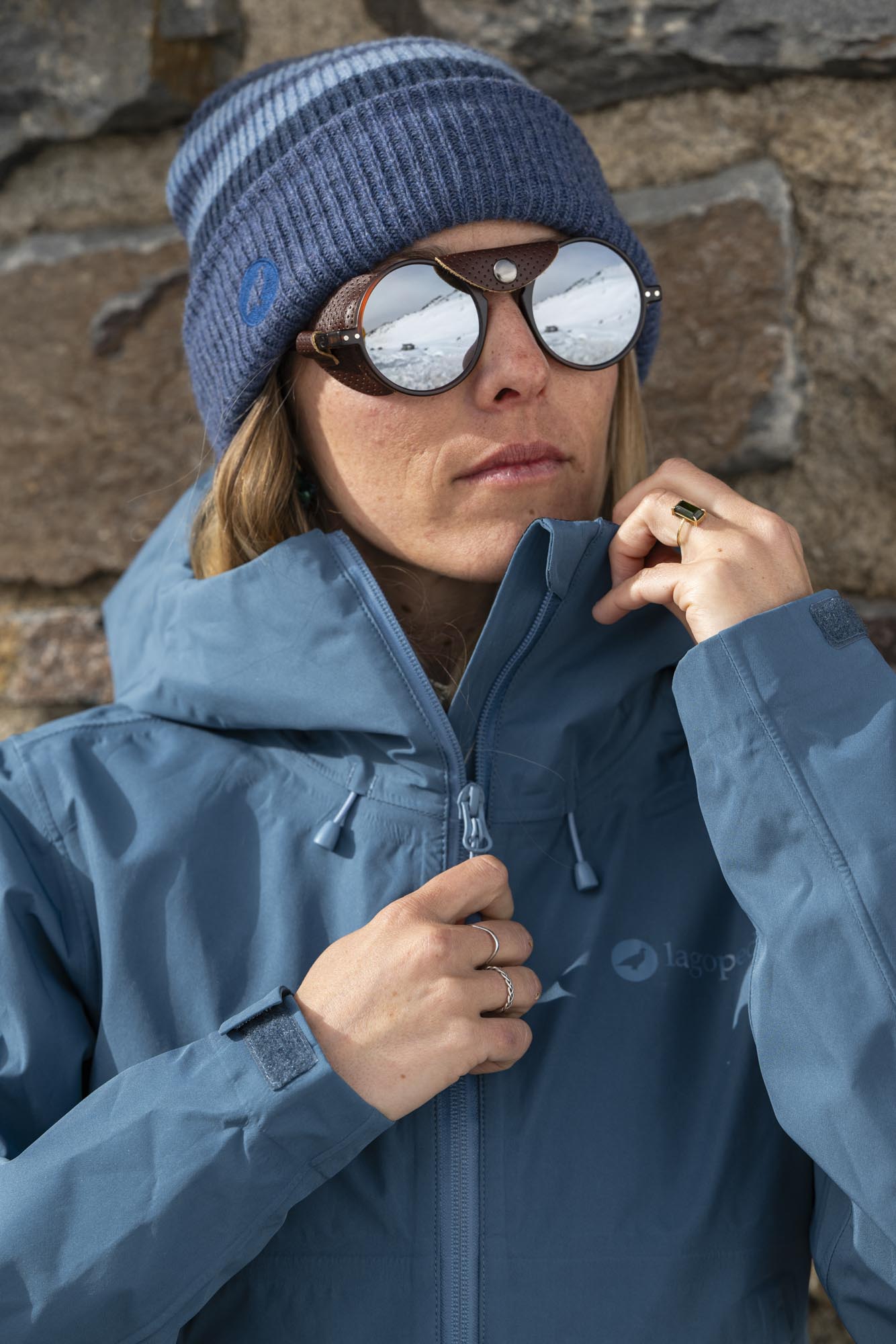
For this adventure, Florian chose gear suited to temperature variations and the demands of big wall climbing. The TETRAS jacket for rainy days, the NAGALAKA windbreaker for its ideal compactness at the bottom of the bag, and the CORUJA down jacket for belays and cool evenings. The HOODEECE fleece allowed climbing without risking damage to a down jacket, and the PHANTOM HOODIE served as a mid-layer. The TEETREK t-shirts, breathable and quick-drying, completed the outfit. Finally, the PTARMIGAN shorts proved perfect for afternoons at the lodge and the hottest days.
The gear perfectly fulfilled its role, especially during the colder second week. Lightness, technicality, and durability: essential criteria when traveling far with no margin for error. Being able to rely on your clothing is peace of mind that allows you to focus on what matters: climbing, living, discovering.
For a guide, these breaks away from the Alps have a special value. It’s an opportunity to discover new adventure terrains, test routes potentially accessible to future clients, and better understand local logistics. But it’s also a personal moment, to climb at one’s own pace, reconnect with friends, and experience the mountain without guiding.
Taghia, with its raw beauty and endearing community, will remain a significant landmark in Florian’s travel journal. A place where rock, culture, and silence together create a rare form of balance.
Florian Vallati - Lagoped Family
Originally from Briançon and now based in Chamonix, Florian, 25, grew up skiing, moving from high-level alpine skiing to ski touring and mountaineering. Ski instructor, high mountain guide, and member of the mountain rescue team with the CRS, he spends most of his time outdoors, between summits and waterfalls, with a special affection for his home mountain range: the Écrins.


