




Gravel in Morocco: A Bikepacking Adventure
|
|
Time to read 4 min
Cart
Shop now:
|
|
Time to read 4 min
Cycling across Morocco means accepting to lose control to reconnect with what's essential. For Charlotte and Nicolas, creators of the RISE project, this 2000 km journey was not just a sporting challenge: it was a necessity for disconnection, an open-air laboratory, and a test of resilience after an intense year.
After a year dedicated to preserving world heritage with their foundation Rise Our World Heritage, the need to slow down became obvious. "We needed to rediscover the adventure that drives us," confides Charlotte. The initial goal was ambitious: to cycle from Agadir to Grenoble. But adventure also means the unexpected. Between mechanical problems and logistical challenges, the duo lost 11 days of riding. No matter, the crossing of Morocco transformed into a 20-day odyssey of pure intensive bikepacking.
One of the major challenges of this expedition was technical: testing equipment for their future shoots. On their titanium bikes, they had to face terrain whose harshness they hadn't anticipated. Nicolas, in full rehabilitation after cruciate ligament surgery, was returning to sports after four months of completeหยุด. The bike trip then becomes a lesson in humility, where one accepts not to go as fast as before to better savor the journey. The body, this incredible machine, adapts quickly nonetheless: cycling is not a competition, it is a journey where you take your time.
The route followed the mythical "Caravan Route", a historical itinerary identified on the reference site bikepacking.com. From the very first pedal strokes, the tone was set: 2000 km and 28,500 meters of positive elevation gain. Leaving the hustle and bustle of Agadir to delve into the Anti-Atlas is to enter a mineral world where every kilometer is earned.
The crossing of the Sahara Desert will remain the most challenging day. Gravel biking in Morocco takes on an epic dimension here: the heat is crushing (up to 34°C), the terrain is incredibly technical, and the sand often forces riders to push their bikes for kilometers.


The most challenging day was crossing the Sahara desert. Everything was tough – the heat, the technicality of the terrain, the length, the sand – but it was also a day we would gladly repeat because the difficulty was offset by the beauty of the landscapes and the magic of being in the middle of the desert with two bikes.
Water management was the number one logistical challenge. Carrying 10 liters of water per person is a colossal burden, but vital. To distribute this weight, the duo used classic water bottles supplemented by 4-liter filtering flasks, strapped over their saddlebags or tucked inside for greater stability. This is the price of peace of mind in regions where it hadn't rained for two years.
The change in atmosphere is radical as you head north. Leaving the desert, the thermometer plummeted. In the Atlas, near Mount Toubkal, temperatures reached -2°C, with a wind chill of -7°C.
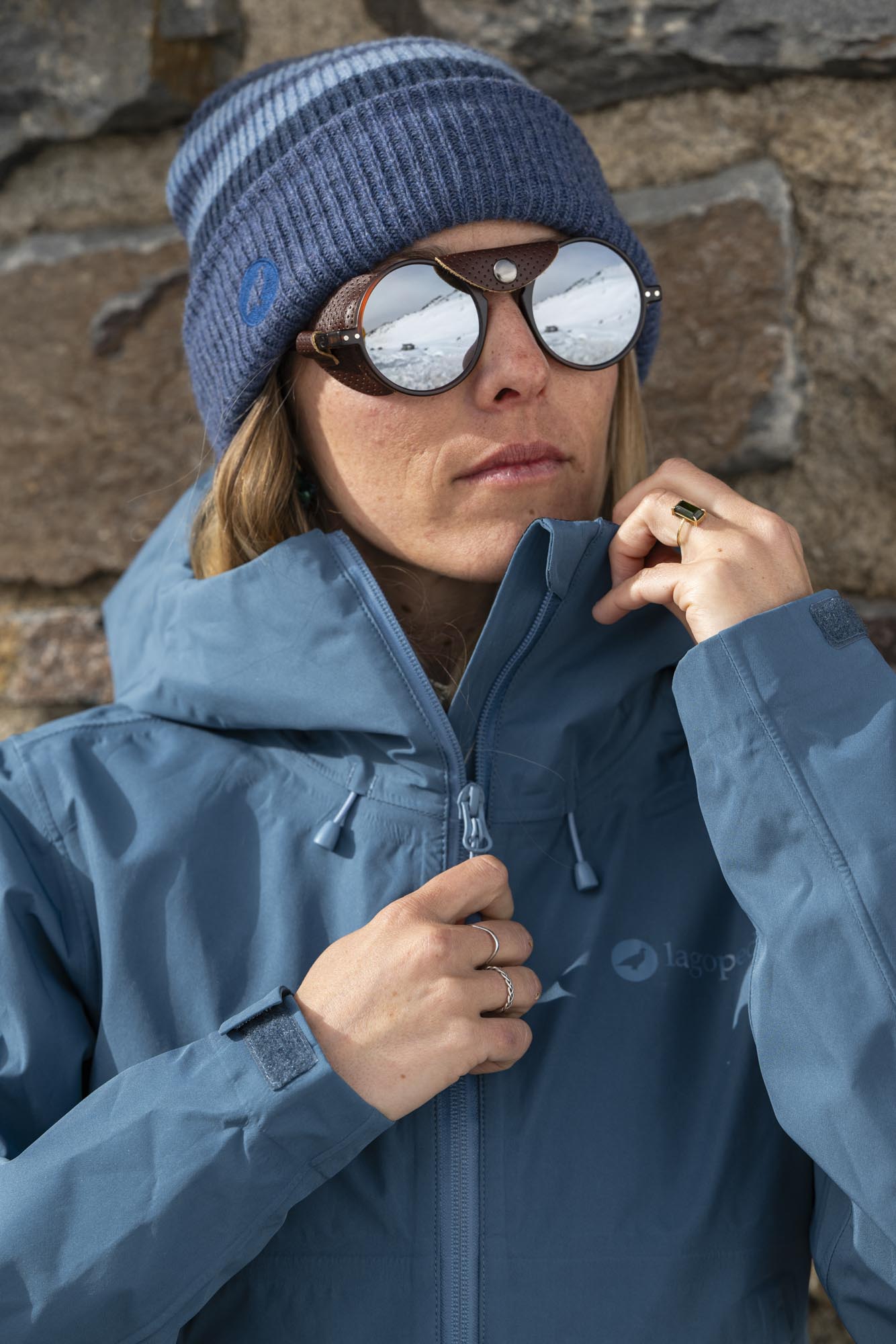
Here, layering became a matter of survival. Having set off lightly, without fleeces, Charlotte and Nicolas had to improvise. "I added my windproof rain pants over my leggings to warm up," explains Charlotte. Suffering from Raynaud's syndrome, she even used freezer bags in her shoes to insulate her extremities. The Lagoped equipment was put to the test: while the EVE jacket has been their essential for years, the extreme conditions of the Atlas highlighted the importance of perfectly adjusted technical gear.
On the Moroccan trails, the choice of bike is crucial. Charlotte and Nicolas explored the limits of gravel biking versus mountain biking.
Gravel: Ideal for efficiency on compacted dirt tracks. Equipped with a solar-rechargeable Coros Dura GPS, navigation becomes child's play.
XC Mountain Bike: More comfortable on the steep and technical descents of the Atlas.
A major problem spiced up the journey: brake failure. Without a bleed kit in the middle of nowhere, Charlotte had to travel almost 500 km with only one functional brake, sometimes walking down the steepest slopes. This highlights a golden rule of bikepacking: in remote areas, mechanical simplicity is often safer than pure performance.
Comfort is a luxury rediscovered after days in the saddle. For rest, the duo used an ultralight Samaya tent and wide sleeping pads to maximize recovery. Learning to listen to their bodies became their priority: where they never took breaks on short formats, they instituted a "rest day" once a week to last longer.


Spending 20 days in the saddle inevitably causes pain. Their secret? No underwear under the cycling shorts to limit chafing, daily hand washing, and a "miracle" baby cream found in a local pharmacy.
On the nutrition side, while COOKNRUN bars and freeze-dried meals COOKNRUN provided for the first few days, they quickly had to adapt to local resources: dates, almonds, walnuts, and the essential tagines or omelets in small roadside restaurants. "We ate incredibly often because the effort is very draining," they joke.
The outcome of this crossing is clear: cycling accelerates relationships. Learning to communicate through pain, managing breakdowns together, and sharing sunrises over the Sahara creates unbreakable bonds. Growing one's love through effort is undoubtedly the most beautiful reward.
Charlotte and Nicolas' story reminds us that adventure begins where your comfort zone ends. Whether on the trails of Morocco or in your local area, gravel biking is an invitation to freedom.
Charlotte Martin
Former trail runner turned photographer and videographer, Charlotte Martin sees the mountains as a space for resilience and meditation. After rebuilding herself through the peaks, she now dedicates her energy to capturing the beauty of the world while seeking concrete solutions for the climate with the RISE – Our World Heritage foundation. Whether she is suspended from a rope, under a paragliding wing, or at the handlebars of her gravel bike, Charlotte transforms every sporting challenge into a human and committed adventure. e.


