




The guide to choosing your sports and mountain sunglasses
|
|
Time to read 4 min
Cart
Shop now:
|
|
Time to read 4 min
Whether you're on a glacier or a technical trail, your eyes are on the front lines. Choosing suitable eye protection is not just about comfort; it's a necessity for your safety and performance.
This guide will help you understand protection indexes and lens technologies and find the ideal frame for your outdoor activities.
Not all outdoor activities demand the same from your vision. Light intensity, glare, and contrast variations differ depending on whether you're in a forest or on a snowfield.
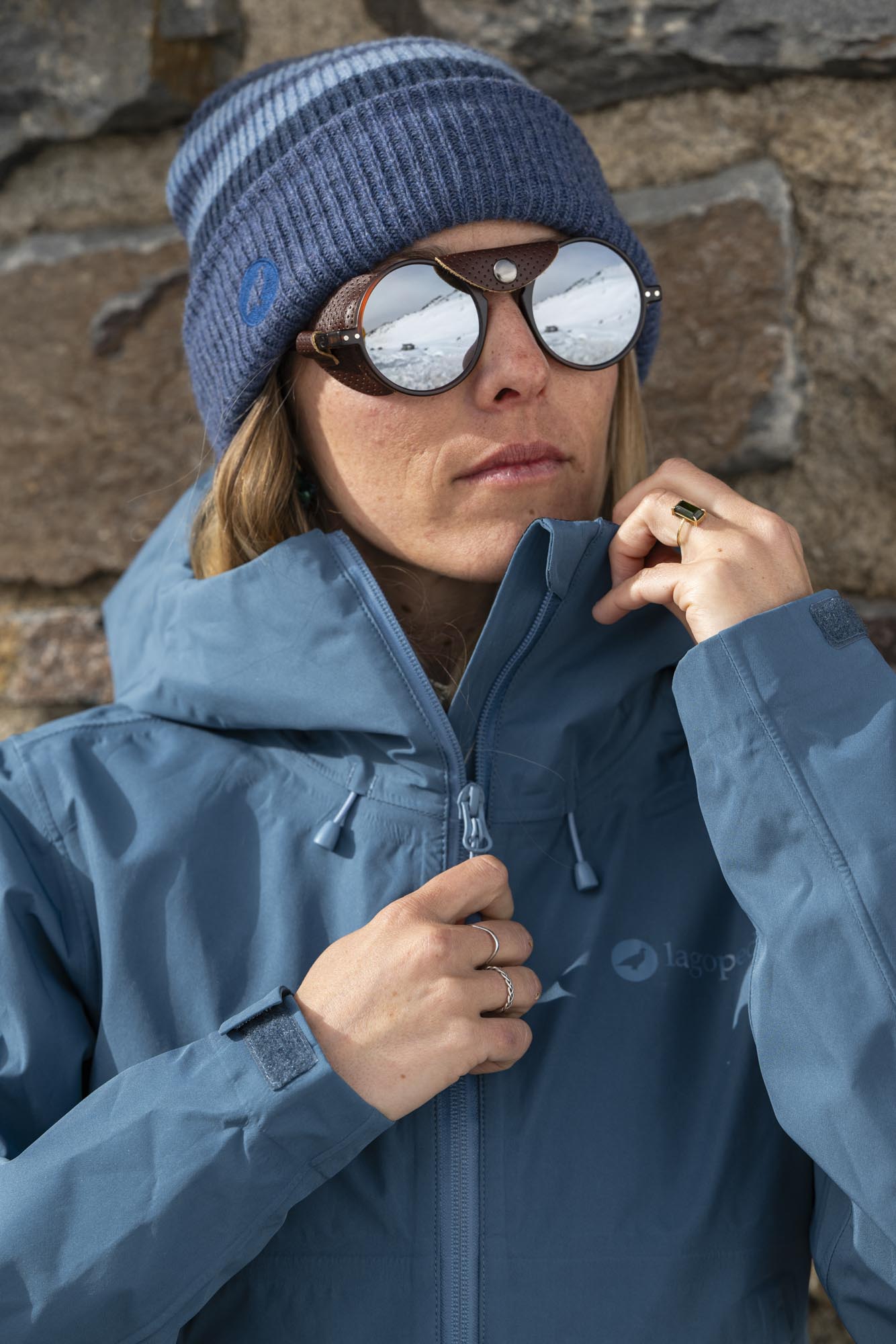
At high altitudes, the atmosphere is thinner and filters less UV. Moreover, snow reflects up to 80% of solar rays. For these disciplines, using category 4 sunglasses is essential. These lenses block most visible light to prevent massive glare. For mountaineering, opt for frames with side protection, such as the removable sun shields on Lagoped models, to block incidental rays reflecting off walls or glaciers.
For trail running or gravel biking, your needs focus on stability and contrast management. You often transition from shaded areas to highly exposed ones. Lightweight sunglasses are crucial so you can forget you're wearing them during exertion. A 23-gram frame, like the LAGOPEYE, prevents pressure points on the nose while ensuring optimal hold during vibrations on trails.
When climbing, you need perfect peripheral vision to spot holds. High-quality optical lenses, free from distortion, are essential. Choosing an unbreakable material like polycarbonate is a prerequisite to withstand potential impacts against rocks.
To choose the right sunglasses, you need to understand the technical specifications. Here are the key points to avoid making a mistake.
This is the most frequent question. The category defines the percentage of visible light transmission (VLT):
A polarized lens contains a filter that eliminates horizontal reflections. In practice, this removes the "mirror effect" on water, wet roads, or snow. For ski touring, polarization offers incredible comfort by better revealing the contours of the snowpack. However, for some very specific uses, such as reading digital screens (some GPS devices or phones), polarization can sometimes darken the display.
Color is not just aesthetic. A brown or gray lens helps enhance natural contrasts. The mirror effect (silver), beyond style, has a thermal function by reflecting part of the infrared heat away from your eyes, which reduces eye strain during long summer days.
At Lagoped, we have designed eyewear that meets the demands of mountain guides while minimizing our environmental impact. Made in France, our frames embody our vision of sustainable equipment.
Most glasses on the market use virgin plastics and metal screws that are difficult to recycle. Lagoped glasses break the mold:
.
The strength of our flagship model lies in its versatility. With a featherlight weight of 23g (frame + lenses), you'll forget you're wearing them. For demanding outings, you can add the removable sun shield (5g) which transforms your lifestyle glasses into true high-mountain equipment.
Our lenses come from upcycling: we recover high-quality polycarbonate lens stocks from French productions. This allows us to offer top-notch optics (total UVA, UVB, UVC protection) while avoiding the production of new materials.
"Light and well-designed, they provide all the comfort you're looking for. The view is very pleasant."
Choosing Lagoped means opting for technical sunglasses that support local industry and the preservation of our natural playgrounds.
Polycarbonate is an ultra-light and virtually unbreakable material. It offers essential safety in case of falls or stone projections, unlike mineral lenses which can break.
Rinse them with clear water after each outing to remove sweat salt or sand. Always use the fleece pouch provided by Lagoped to clean them, as abrasive fabrics scratch the lenses.
Yes, absolutely. In the mountains, the light "turns" and can seep in from the sides of the frame, causing significant visual fatigue. The sun shield blocks these lateral light entries.


